Mobile mechanic vs. repair shop in Las Vegas: which should you call?
Your car is parked at home, it needs attention, and getting it to a shop would mean rearranging your day. A mobile mechanic may save that trip. But convenience alone should not decide where the work happens. The fault, the equipment needed, and the place where the vehicle sits all matter.
For drivers in Las Vegas, Henderson, and the surrounding valley, the useful question is whether a technician can safely diagnose and complete this particular job at your location. This guide explains what to compare before you commit to an appointment or a tow.
Start with the problem, not the replacement part
A car that will not start does not automatically need a battery. A clicking noise, a slow crank, and an engine that cranks normally without starting can point toward different checks. Describe what the car does instead of ordering a part based on a guess.
An on-site diagnostic visit can help establish whether the problem is suitable for mobile repair. Testing may reveal a simple connection issue, a worn component, or a fault that needs a shop. A diagnostic appointment is an investigation, not a guarantee that every possible repair will be completed during the same visit.
Jobs that may suit a mobile visit
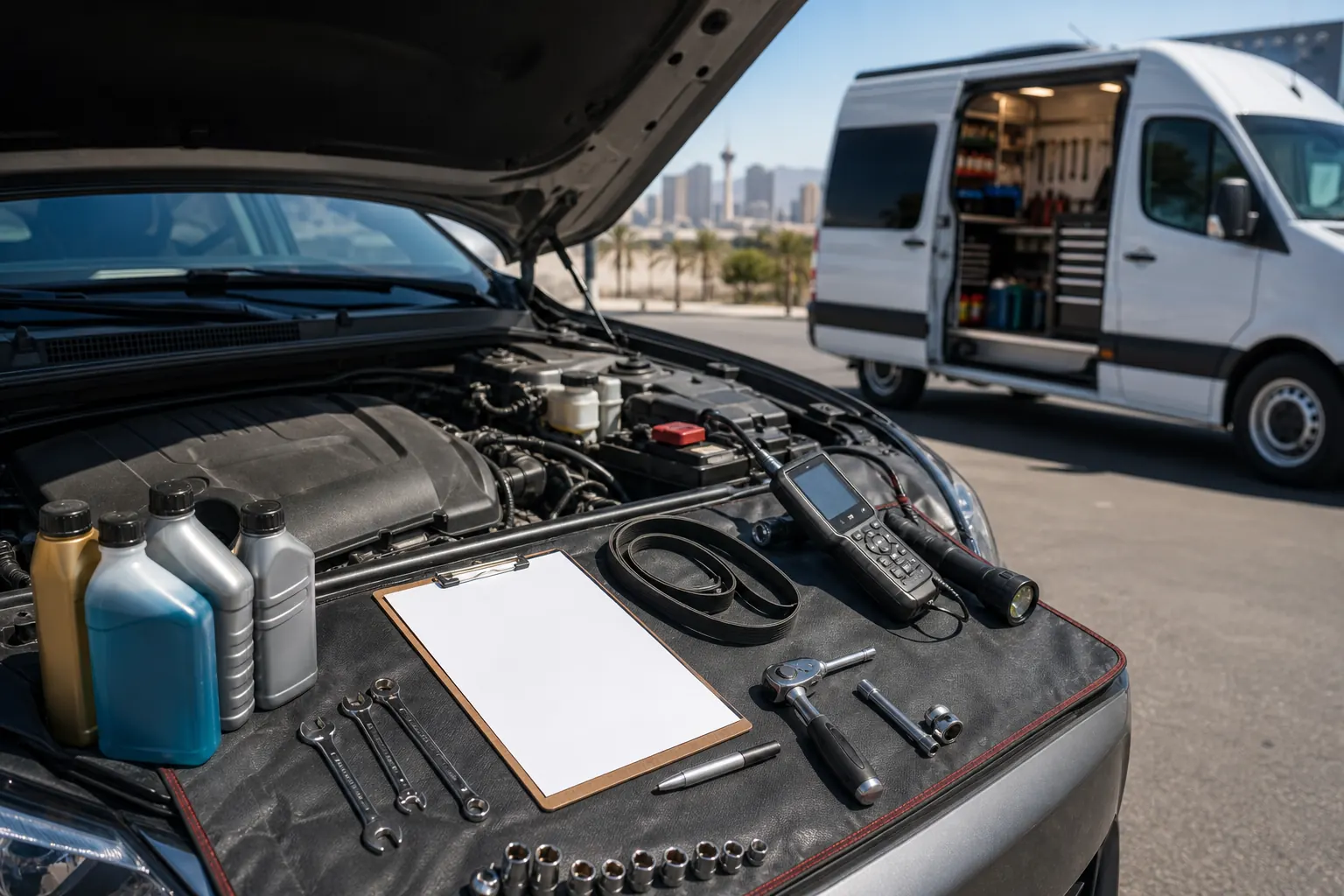
Battery testing and replacement, some starting and charging repairs, routine oil service, filter replacement, and certain brake jobs may be practical at an appropriate location. Access varies by vehicle. A battery mounted in an awkward compartment or a component buried behind other assemblies can change the equipment and time required.
For maintenance, provide the vehicle’s year, make, model, engine, and the work you want done. For a repair, include warning lights, noises, leaks, recent work, and whether the vehicle can move. Those details help the technician assess the job before traveling and reduce avoidable parts-ordering mistakes.
When a repair shop is the better setting
A workshop may be necessary for jobs requiring a full vehicle lift, major disassembly, machining, heavy lifting equipment, or specialized alignment and balancing equipment. Extensive engine or transmission work can also require a controlled workspace that a driveway cannot provide.
Weather and access can rule out otherwise suitable work. A sloping driveway, loose gravel, traffic exposure, or insufficient clearance can make lifting a vehicle unsafe. A cramped parking garage may prevent a service vehicle from reaching the car. Ask about these limitations before assuming an on-site repair is possible.
Permission to work matters at hotels and apartments
Being allowed to park somewhere does not necessarily mean repairs are allowed there. Check with the property manager or hotel before arranging work in a shared lot. Mention any garage height restrictions, access gates, towing rules, or restrictions on fluid-related service.
Tell the mechanic the exact parking location and whether there is a safe, level working area. Do not move an unsafe vehicle just to create a convenient workspace. If the location is unsuitable, discuss towing or another safe arrangement rather than trying to improvise repairs beside moving traffic.
Compare the complete estimate
A useful comparison includes the mobile service call, diagnostic time, labor, parts, and any quoted travel or other charges. For a shop visit, consider towing when necessary and the transport you will need after dropping off the car. A mobile visit may avoid those arrangements, but it is not automatically the cheaper choice for every repair.
Our published pricing is a $100–$300 service call and $100–$300 per hour for labor, billed at $25–$75 per quarter hour. Parts are additional. Vehicle location, availability, access, diagnostic complexity, and other job-specific factors affect the quote. See current pricing and service-time guidance, then request an estimate for your vehicle.
Ask what the initial charge covers and whether diagnostic time is separate from the repair estimate. If testing uncovers additional work, get a revised estimate and approve the change before the repair proceeds. Do not treat a general service range as an all-inclusive quote.
Questions worth asking before booking
- Can you assess this vehicle and symptom at my address?
- What working space and property permission will you need?
- What does the service-call charge include?
- Will parts availability require a second visit?
- How will you explain findings and request approval for extra work?
- What warranty terms apply to the specific parts and labor quoted?
You can also ask whether observing the work or taking a short video is appropriate. Arrange that beforehand and stay outside the technician’s work area. Watching a repair should never interfere with safe lifting, moving components, or electrical testing.
When not to drive to either appointment
Do not drive with a serious loss of braking, a significant fuel leak, overheating, or another condition that makes vehicle control unsafe. If there is fire, injury, or immediate danger, call 911. Otherwise, describe the condition to the service provider and ask whether towing is needed.
For help choosing between an on-site visit and a workshop, call 702-547-0038. Share your vehicle details, symptoms, and location. We can discuss available mobile repair services and whether the job appears suitable before you arrange the visit.