
A practical fleet maintenance checklist for Las Vegas businesses
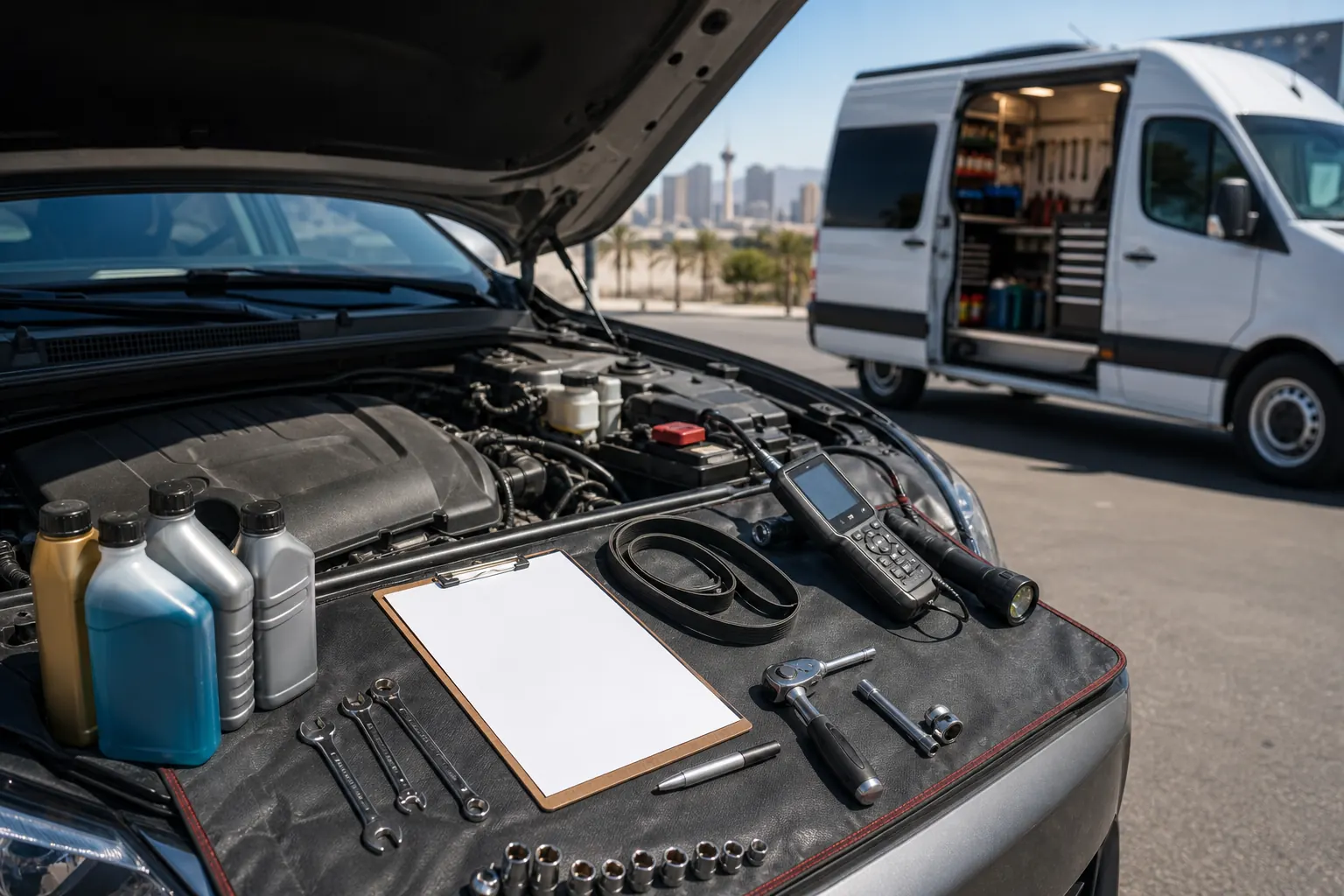
A work van that misses its first appointment can affect the rest of the day’s schedule. Preventive maintenance cannot eliminate every breakdown, but it gives a business a way to catch visible problems, track overdue service, and plan repairs before a vehicle is urgently needed.
A useful fleet checklist does not need to be complicated. It needs to match the vehicles you operate, the work they do, and the person responsible for following up. A delivery car, a diesel truck, and an RV should not all receive the same maintenance schedule simply because they belong to one business.
Start with a record for each vehicle
Record the vehicle identification number, year, make, model, engine, current mileage, and normal use. Add engine hours where the vehicle records them and the manufacturer’s service guidance uses them. Keep the correct oil, fluid, filter, and tire specifications with the record rather than relying on memory.
Separate completed work from recommended work. An invoice showing an inspection is not proof that every recommendation was repaired. Each open item should have an owner, an urgency level, and a next step. Note whether the vehicle is available for use, awaiting diagnosis, or removed from service for a safety concern.
Give drivers a short pre-trip check
Drivers should report visible problems before starting their route. The check should suit the vehicle and comply with any inspection requirements that apply to your operation. It is not a substitute for a technician’s inspection or a legally required commercial-vehicle inspection.
- Look for visibly damaged or underinflated tires and objects near the vehicle.
- Check required exterior lights, mirrors, and basic visibility.
- Note new warning lights or messages before departure.
- Report fresh leaks, unusual smells, or changes in starting behavior.
- Confirm loads and equipment are secured using the appropriate restraints.
- Report braking or steering changes immediately instead of waiting for the next scheduled service.
Do not ask a driver to crawl under a vehicle, open a hot cooling system, or diagnose an electrical fault. Make it clear who they should call and which symptoms require stopping use of the vehicle. A checklist loses its value when drivers believe reporting a fault will be ignored.
Use the manufacturer’s intervals
Build the service schedule from the owner’s manual or the manufacturer’s fleet guidance for the exact vehicle. Account for time as well as mileage. A vehicle with low mileage can still have time-based maintenance due.
Frequent idling, short trips, towing, heavy loads, dusty conditions, and other operating patterns may fall under a manufacturer’s severe-service schedule. Check the applicable definition rather than assigning a universal oil-change interval to every vehicle. Las Vegas operating conditions make that review worthwhile, but location alone does not replace vehicle-specific instructions.
Pay attention to cooling, tires, and batteries
Arrange inspections of cooling-system condition and follow the manufacturer’s fluid specifications and replacement intervals. Leaks, damaged hoses, or recurring temperature warnings need assessment; topping up fluid repeatedly is not a diagnosis. Never open a pressurized cooling system while it is hot.
Check tire pressure when tires are cold, using the vehicle placard and manufacturer guidance for the configuration and load. The number molded into a tire sidewall is not automatically the correct operating pressure for your vehicle. Track tire damage and uneven wear rather than treating inflation as the only tire-maintenance task.
Starting complaints deserve attention before a driver becomes stranded. Battery condition, connections, and charging-system performance can require separate checks. Replacing a battery without understanding a recurring discharge may leave the underlying fault unresolved.
Plan mobile work around the parking location
Mobile preventive maintenance may allow suitable work at your business instead of requiring staff to shuttle vehicles to a shop. Confirm the proposed services, vehicle details, parts requirements, and access before arranging a group visit.
Provide a level working area with enough clearance and permission for the work. Keep employees and customers away from active repairs. Some tasks, including work needing specialized lifting, alignment, or balancing equipment, may still need a workshop. Do not build the day’s route plan on the assumption that every vehicle will be finished at the same time.
Make estimates and approval responsibilities clear
Name the person who can approve diagnostic time, replacement parts, and additional work. Tell the technician how to reach that person while vehicles are being inspected. If approval is delayed, a vehicle may remain unavailable even after the cause of the fault is identified.
Our general pricing is a $100–$300 service call and $100–$300 per hour for labor, billed at $25–$75 per quarter hour, with parts additional. Fleet arrangements, maintenance bundles, or annual agreements require a separate discussion; do not assume a particular discount or coverage. Review pricing information and request a scope-specific estimate.
Track useful results without guessing
Record the time a fault was reported, when service was arranged, when the vehicle became available again, and what was actually repaired. Distinguish time waiting for parts or approval from hands-on repair time. Those records help explain where downtime comes from.
Review repeat complaints by vehicle and component. If the same warning returns after service, give the technician the earlier findings and invoices. A clear history is more useful than starting each visit with only a description of the latest symptom.
Arrange a fleet maintenance discussion
Call 725-277-5350 with the number and types of vehicles, their usual parking location, and the services due. We can discuss suitable mobile work for your fleet and identify jobs that need a different setting. See our service overview for Fleet, Diesel, RV, and other mobile repair options.