Preventive Vehicle Maintenance in Las Vegas
Build a maintenance plan around your actual vehicle
Preventive maintenance means addressing scheduled service and developing wear before a breakdown forces the decision. Mobile Mechanic dot Vegas can help review your vehicle’s history, visible condition, and upcoming needs, then determine which work is practical at your location. A useful plan prioritizes specific findings rather than selling every service at once.
Start with the year, make, model, engine, mileage, and records you have. If the history is incomplete, say so. Missing paperwork does not prove that every component needs replacing, but it does make establishing a reliable baseline more important.
Separate urgent problems from routine upkeep
A maintenance appointment is appropriate for due fluid services, inspections, and wear items. It is not a reason to postpone a brake problem, an oil-pressure warning, severe overheating, or a flashing check-engine light. Active faults may need diagnosis or a no-drive recommendation before ordinary service can begin.
Describe new noises, leaks, vibration, starting changes, or warning messages when you book. For rough running or warning lights, see vehicle diagnostics and the check-engine-light guide. For rising temperature or steam, use the overheating guidance and avoid opening a hot cooling system.
Use the schedule and service history together
The manufacturer’s schedule identifies items due by mileage, elapsed time, or operating conditions. Some parts age even when a vehicle is driven infrequently. Others need inspection rather than automatic replacement at a convenient round mileage. The exact engine and drivetrain can change the requirements substantially.
Records prevent duplicate work and reveal recurring patterns. A recently replaced battery, repeated coolant additions, or unusually short brake life can change the priorities. Bring invoices where possible, including work done by another provider. Knowing which fluid or part was used can be as important as knowing when it was installed.
Driving conditions also matter. Short trips, heavy idling, towing, dusty roads, and high-load operation may place a vehicle under specific severe-service guidance. Las Vegas heat makes cooling and battery concerns especially noticeable, but it does not replace the vehicle manufacturer’s instructions with a universal local schedule.
What a practical maintenance review can cover
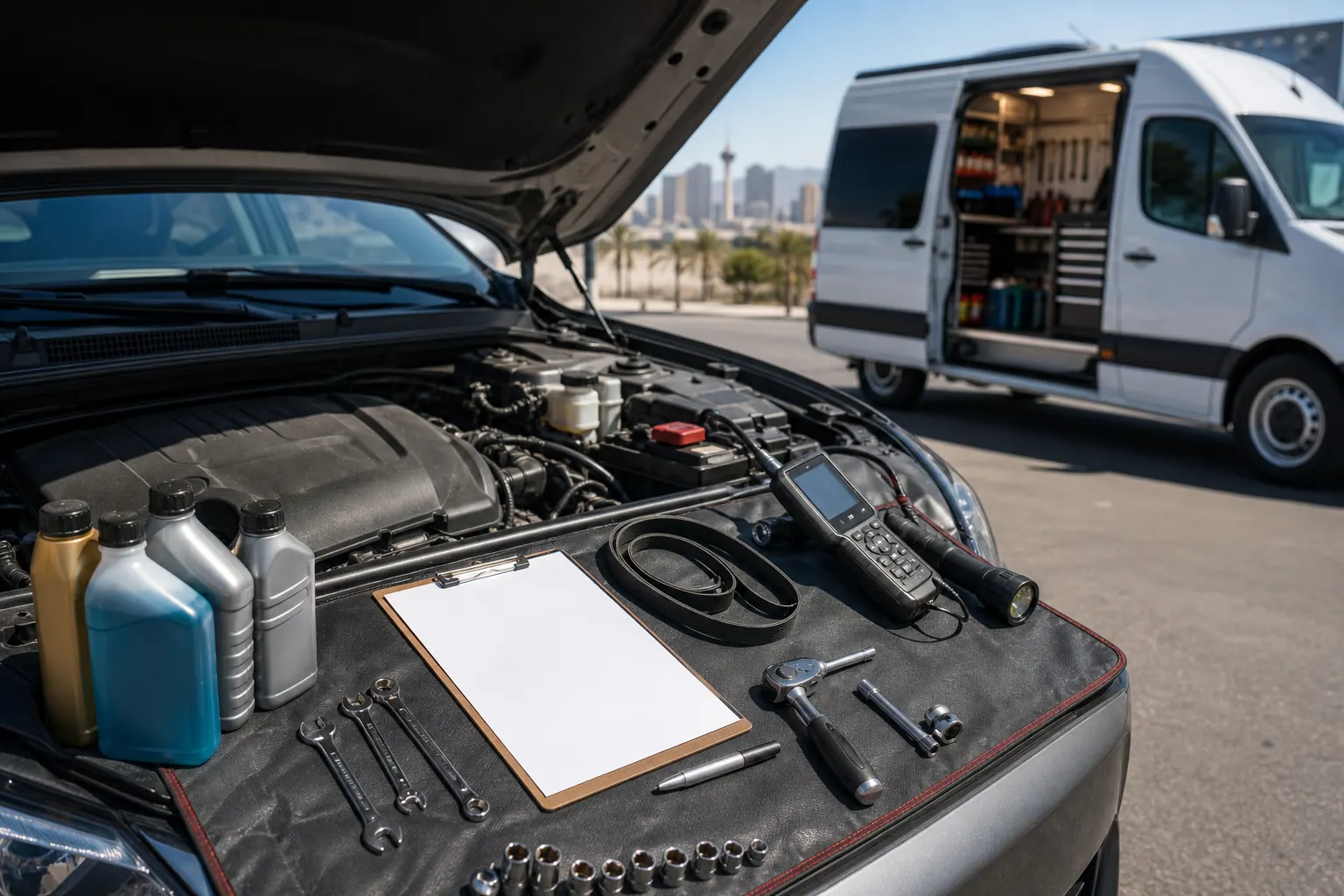
- Oil-service history, oil level or visible leakage concerns, and the correct lubricant specification for the engine.
- Brake symptoms, visible wear where accessible, and whether a dedicated brake inspection is needed.
- Battery condition, terminal security, starting behavior, and any charging warnings.
- Accessible belts, hoses, coolant condition concerns, and evidence of leakage once safe to inspect.
- Engine and cabin filters, exterior lights, wipers, tire condition, and manufacturer-specified fluid services.
An inspection has limits. A visual look cannot certify the internal condition of an engine, transmission, or hidden component. Tires may need removal or specialist equipment for a complete assessment, and inaccessible areas should be described as uninspected rather than reported as good by assumption.
Fluids are not interchangeable maintenance items
Engine oil, coolant, brake fluid, transmission fluid, and driveline lubricants serve different purposes and have different specifications. A service recommendation should identify the correct fluid, why the work is due, and which procedure suits the vehicle. Fluid color alone rarely tells the full story.
Some transmissions have temperature-dependent level checks or restricted access. Some cooling systems need a specific filling or bleeding procedure. These details affect mobile feasibility. A generic flush package is not a substitute for manufacturer guidance, and a neglected or malfunctioning system may need diagnosis before service.
Topping up a low reservoir can hide an unresolved leak. Brake fluid can also fall as pads wear, so its level must be considered with brake condition. Ask why the level changed and whether monitoring or repair is needed rather than assuming repeated additions are normal maintenance.
Belts, hoses, and overlooked time-based items
Accessible accessory belts can be checked for condition, alignment concerns, and tensioner issues, but a timing belt is a separate component with its own service requirements. A belt hidden behind covers should not be judged from the appearance of the accessory belt. If timing-belt replacement is due, confirm the appropriate procedure and service setting.
Hoses can leak at connections or deteriorate in areas that are difficult to see. Cooling-system concerns deserve attention before a long journey, but a clean-looking engine bay is not proof that the system holds pressure or controls temperature correctly. Any additional testing should be tied to a finding or complaint.
Low-mileage vehicles still need attention to tires, battery charge, fluid time limits, and rubber components. Conversely, high mileage alone is not a reason to replace every accessible part. Condition, service requirements, and the consequences of failure should guide the plan.
Prioritize the work instead of creating one large package
A clear plan can separate immediate safety concerns, overdue required maintenance, and items to monitor. Ask what could happen if a recommended item is deferred and what evidence supports the recommendation. This makes it easier to approve the important work without confusing optional convenience items with urgent repairs.
For focused service information, see brake repair, oil changes, battery replacement, and tune-up service. Coordinating genuinely due work can be convenient, but each item should still have a clear purpose and scope.
Preparing the location and the quote
Describe the parking surface, clearance, property permission, and whether the vehicle can be operated safely. Wheel removal, underbody access, fluid handling, weather, and equipment needs can limit what is suitable on-site. Some maintenance belongs in a shop even when an initial review can happen at your location.
Provide service records before the visit if possible and identify your main goal, such as catching up on unknown history or preparing for regular commuting. Request an itemized, vehicle-specific estimate that separates inspection, scheduled service, and any repair findings. Use pricing information as a starting point and approve changes before the scope expands.
Keep a record that makes the next visit easier
Record the service date, mileage, fluid specification, installed parts, and any observations left for follow-up. Note the next due item using the applicable schedule, not a guessed universal interval. If a symptom persists after maintenance, report it rather than assuming it will improve with time.
A maintenance review reduces avoidable neglect; it cannot guarantee that a vehicle will never break down. The useful outcome is a clearer picture of what was checked, what was serviced, what needs attention next, and what still needs separate investigation.
Preventive maintenance questions
What if I have no service records?
Start with the manufacturer schedule and a condition review. Identify what can be verified, which time-sensitive services may be due, and which unknowns need discussion. Missing records do not automatically justify replacing everything.
Can maintenance fix an existing warning light?
Only if the maintenance corrects its actual cause. A warning or active symptom often needs diagnosis first. Routine service should not be presented as a guaranteed repair for an unidentified fault.
Can all scheduled maintenance be completed at home?
No. Access, equipment, fluid procedures, vehicle design, and safe working conditions determine what can be done on-site. Confirm the specific items before booking and plan shop work separately when necessary.
Request service at your location
Mobile Mechanic dot Vegas serves Las Vegas, North Las Vegas, Henderson, Summerlin, Spring Valley, Enterprise, and Paradise. Check our service areas and describe the vehicle’s exact location so access and suitability can be confirmed. Call 702-547-0038 or use the contact page to discuss the vehicle, symptoms, and proposed work before booking.