Brake Repair in Las Vegas
Mobile brake repair starts with a safety check
Squealing, grinding, shaking during braking, or a changing pedal feel deserve an inspection, not an automatic pad replacement. Mobile Mechanic dot Vegas can assess whether brake work is suitable at your location and explain the findings before you authorize repairs. The correct repair depends on the condition of the friction parts, hydraulic system, and related hardware.
If the pedal sinks, stopping distance suddenly increases, brake fluid is leaking, or a red brake warning remains on with the parking brake released, stop driving and arrange a safe assessment or towing. A mobile appointment does not make an unsafe vehicle safe to drive to another location.
What the symptoms can tell you
- A high-pitched squeal may come from a wear indicator, surface contamination, or hardware. Noise alone cannot establish how much pad material remains.
- Grinding may mean the friction material is worn away or another component is contacting the rotor. Continuing to drive can increase damage and compromise braking.
- A steering-wheel shake or pedal pulsation while stopping can involve rotor condition, uneven friction deposits, or other wheel-end problems.
- Pulling to one side can involve uneven braking, a sticking caliper, a hose problem, tires, or suspension. It needs more than a visual pad check.
- A soft or sinking pedal points toward a hydraulic concern. Adding fluid without finding why it is low is not a repair.
An ABS warning is different from a red hydraulic brake warning. Some vehicles retain conventional braking with an ABS fault, but the affected safety functions and driving advice depend on the fault and vehicle. Note every warning displayed and describe how the pedal feels when you call.
How a brake inspection narrows the repair
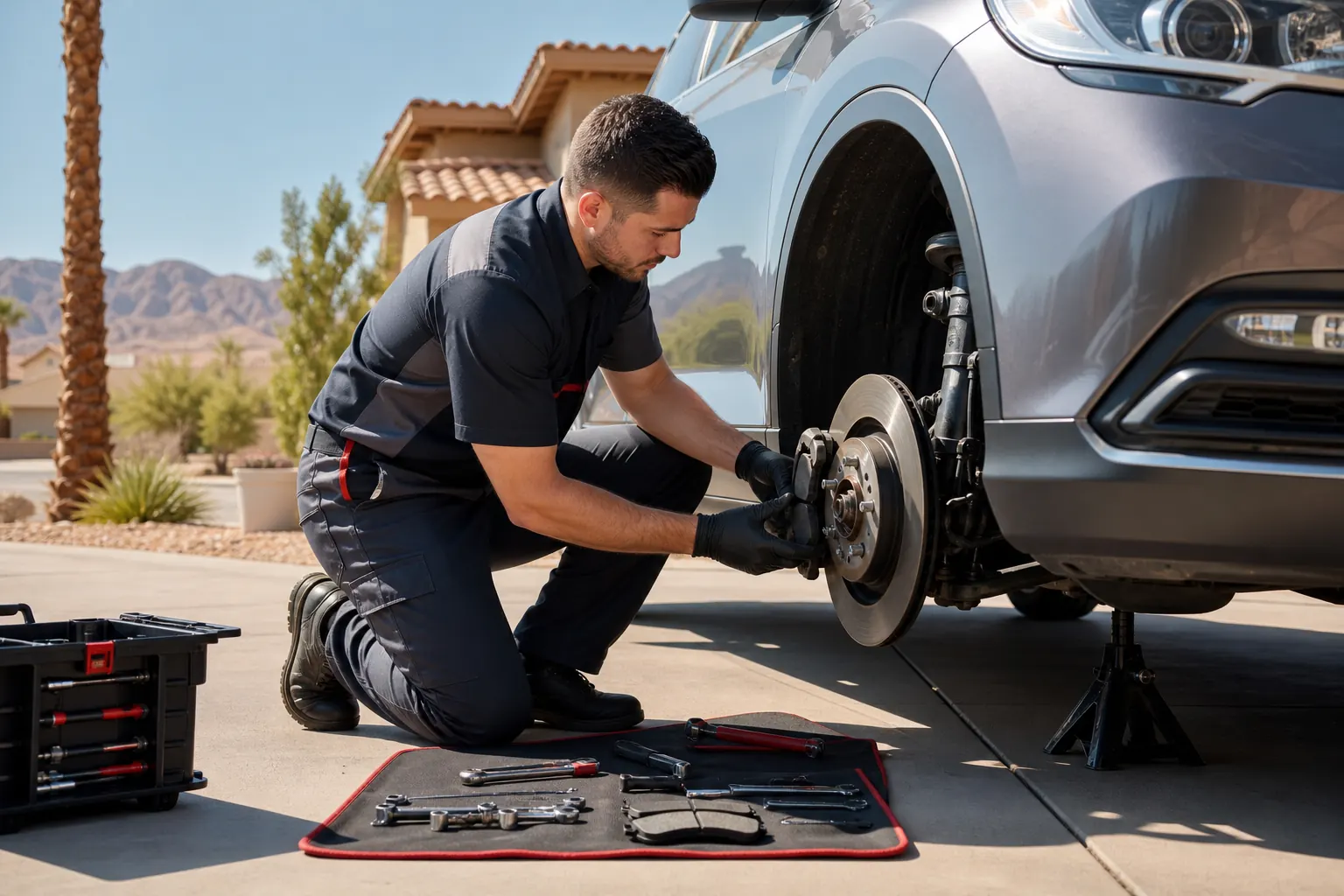
Inspection begins with your description: which wheel seems noisy, whether it happens cold or hot, and whether vibration appears only while braking. The vehicle needs a stable, level work area before wheels can be removed. Safe lifting and access take priority over completing a driveway repair.
A useful inspection checks inner and outer pads, rotor surfaces and thickness against applicable specifications, caliper movement, mounting hardware, visible hoses, and signs of fluid leakage. Looking only through the wheel at the outer pad can miss uneven inner-pad wear. Parking-brake operation may also matter, particularly on rear brake jobs.
Where warning lights or electronically controlled parking brakes are involved, suitable diagnostic equipment and the vehicle-specific procedure may be necessary. A scan helps identify a system fault; it does not replace checking the actual mechanical and hydraulic condition. See our vehicle diagnostics page for concerns that extend beyond normal wear.
Pads, rotors, and the reason they wore out
Brake pads and rotors work as a matched friction system. Pads are generally serviced across the same axle rather than replacing one isolated worn pad. Whether rotors can remain in service depends on measurements, surface condition, and manufacturer guidance, not appearance alone. Machining is not appropriate for every rotor and may require equipment unavailable on-site.
A seized slide pin, sticking piston, restricted hose, or contaminated friction surface can ruin new pads if the underlying problem is ignored. Ask whether the recommendation addresses the cause of uneven wear as well as the worn parts. Caliper replacement should be supported by a finding, not automatically added to every pad job.
Brake fluid service is a separate decision based on the vehicle’s requirements, condition, and any hydraulic work performed. Opening hydraulic components can require bleeding, and some ABS systems need a scan-assisted procedure. Fluid type must match the vehicle; mixing incompatible fluids can cause serious damage.
What can prevent an on-site brake repair
Sloped parking, soft ground, limited clearance, traffic exposure, and property restrictions can rule out mobile wheel removal. Tell us about lowered vehicles, locking wheel nuts, oversized wheels, and electronic parking brakes before the visit. Have the wheel-lock key available if your vehicle uses one.
Severely corroded fittings, broken fasteners, extensive hydraulic faults, and work needing specialized equipment may require a shop. That limitation should be explained before the job expands. If the brakes cannot be restored safely where the vehicle sits, towing is the appropriate next step rather than a temporary compromise.
Get a quote that matches your brakes
Provide the year, make, model, mileage, and engine or VIN when available. Some models have several brake packages, so a model name alone may not identify the correct parts. Explain whether the concern is front, rear, or unknown and mention recent brake or tire work.
Ask what the estimate includes: inspection, pads, rotor decisions, hardware, any necessary fluid work, and verification. If inspection uncovers an additional problem, request the finding and revised scope before authorizing it. The pricing page explains where to start; the actual repair quote needs your vehicle and symptoms.
After the repair
Verification should include checking for leaks or interference, confirming an appropriate pedal feel, and assessing braking performance when conditions allow. Any required pad bedding or break-in instructions should match the installed parts and vehicle. Do not assume a new noise, pulling, or warning light is normal because work was recently completed.
For recurring wear or maintenance planning, see preventive maintenance. Keep the repair record so future inspections can compare mileage, parts, and findings rather than guessing when the brakes were last serviced.
Brake repair questions
Can you tell whether I need rotors from a phone call?
A description or photo may help plan the visit, but rotor replacement depends on inspection and measurements. A firm recommendation should account for thickness limits, surface damage, and the condition of the mating pads.
Is squealing always dangerous?
Not every squeal means braking has failed, but noise cannot confirm that the brakes are safe. Arrange an inspection, and stop driving if noise comes with grinding, pulling, reduced stopping ability, a fluid leak, or a changing pedal.
Can I drive with a soft brake pedal?
A new soft or sinking pedal can indicate a serious hydraulic problem. Do not drive the vehicle to test whether it improves. Arrange an assessment at a safe location or towing.
Request service at your location
Mobile Mechanic dot Vegas serves Las Vegas, North Las Vegas, Henderson, Summerlin, Spring Valley, Enterprise, and Paradise. Check our service areas and describe the vehicle’s exact location so access and suitability can be confirmed. Call 725-277-5350 or use the contact page to discuss the vehicle, symptoms, and proposed work before booking.