Mobile Oil Change in Las Vegas
Oil service means the correct oil, filter, and procedure
An oil change replaces used engine oil and the filter according to your vehicle’s requirements. Mobile Mechanic dot Vegas can discuss on-site service when the vehicle, location, and access allow safe work. The correct specification matters as much as the oil level; viscosity alone does not tell the whole story.
If your oil-pressure warning is on, the engine is knocking, or oil is leaking rapidly, do not treat the appointment as routine maintenance. Stop the engine when safely parked and request an assessment. An oil change cannot repair a pressure fault, major leak, or damage caused by running without lubrication.
When is the next oil change due?
Use the manufacturer’s interval and oil-life system where fitted, together with the required time limit and operating-condition guidance. There is no one mileage interval that suits every engine. Turbocharging, fuel type, oil capacity, and the approved lubricant all affect the service requirements.
Repeated short journeys, extended idling, towing, and some dusty or high-temperature use may fall under a vehicle’s severe-service guidance. Las Vegas weather alone does not justify inventing a new interval; the manufacturer’s definition and your actual driving pattern should guide the decision.
An oil-life display estimates maintenance need. It is not necessarily an oil-level sensor and does not guarantee that the engine contains enough oil. Check the owner’s manual for the correct level-checking method and frequency, especially if the engine has a history of consumption or leakage.
Information to provide before booking
- Year, make, model, engine, mileage, and VIN if the engine specification is uncertain.
- Date and mileage of the last oil service, along with the oil specification if known.
- Any oil-pressure warning, low-level message, unusual noise, visible leak, or burning smell.
- Whether the vehicle uses a dipstick or an electronic level-checking procedure.
- Parking surface, ground clearance, underbody modifications, and any damaged splash shields.
Mention previous drain-plug repairs or a known stripped thread. These details can change how the job should be approached and which parts are needed. If you recently bought the vehicle, uncertain history is worth stating directly rather than guessing the last service date.
What a careful oil service includes
The oil specification, required quantity, filter, and applicable drain-plug or seal requirements should be confirmed before work begins. Vehicles with similar model names can use different engines and filters. Choosing solely by the previous filter label can repeat an earlier mistake.
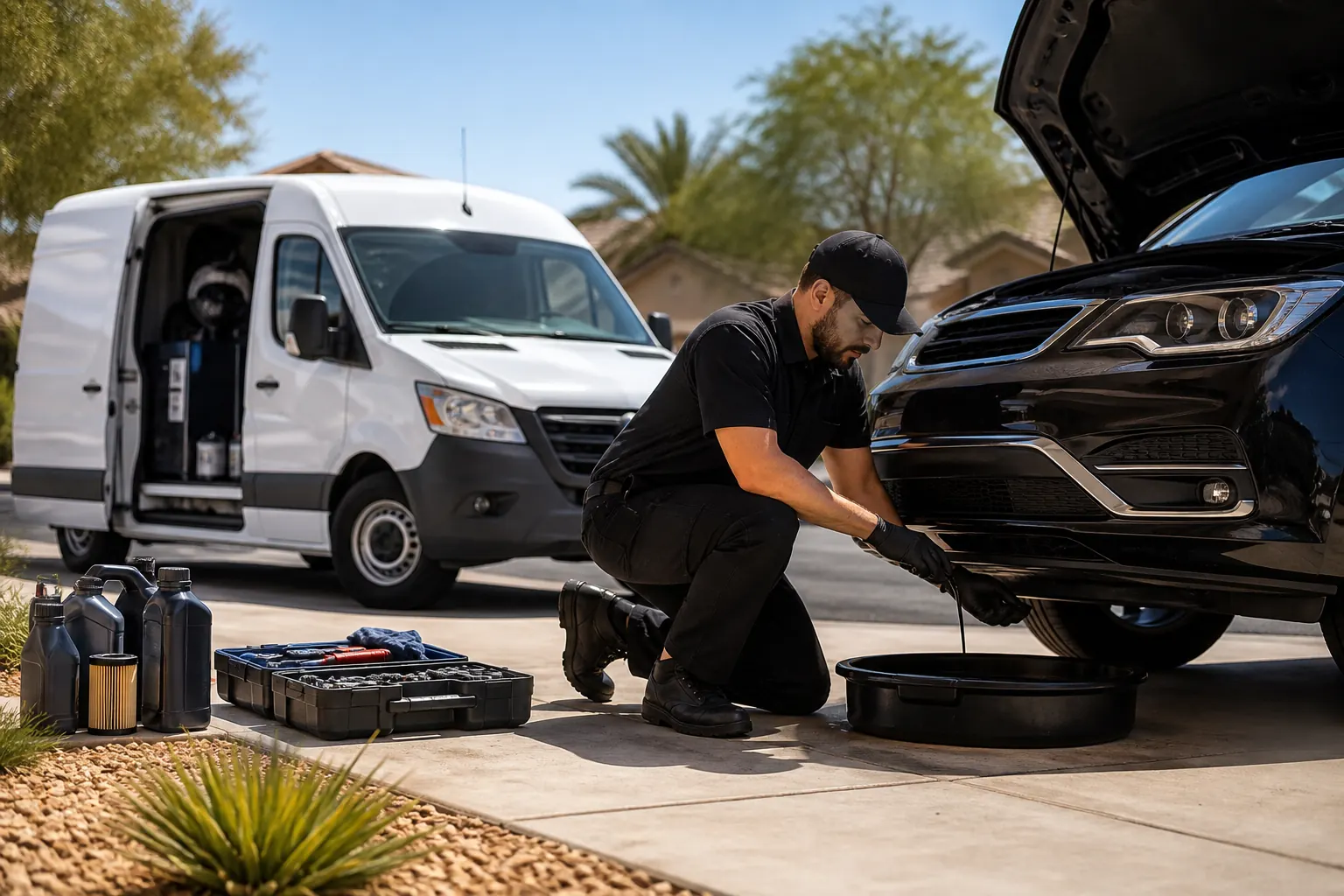
Safe access is established before removing underbody protection or opening the drain. Used oil needs controlled collection to prevent spills and must be handled for appropriate disposal. A mobile service requires a suitable working area, not simply enough room to slide a container under the car.
The filter installation, sealing surfaces, and drain closure require the correct procedure. Some cartridge filters have seals in specific grooves, and a misplaced seal can create a serious leak. Excessive tightening can damage a filter housing, plug, or oil pan; guessing is not a substitute for the relevant specification.
After filling, the oil level is checked using the vehicle’s prescribed conditions. The engine and filter area should be checked for leakage as appropriate, and the final level confirmed. If an oil-life reminder is reset, that should follow the completed service rather than conceal an overdue or incomplete job.
Choosing oil without relying on marketing labels
The owner’s manual may specify a viscosity and a manufacturer or industry approval. Two oils with the same viscosity can meet different requirements. Terms such as synthetic or high mileage do not replace the needed approval, particularly on engines with specific emissions or lubrication requirements.
Using thicker oil to hide a noise or reduce consumption is not an appropriate default recommendation. Nor should an additive or engine flush be automatically included in every service. If an additional treatment is proposed, ask what condition supports it and whether the vehicle manufacturer permits the procedure.
Overfilling is not a useful precaution against consumption. Too much oil can create operational problems, just as too little can. The aim is the correct amount and verified level, not an arbitrary extra quantity because the engine has high mileage.
Leaks and consumption need their own assessment
Oil on the ground may come from the engine, transmission, or another system. Color alone is not always conclusive. Tell us where the spot appears, how quickly it develops, and whether the level is dropping. Avoid reaching under a hot or unsupported vehicle to investigate.
Burning oil can occur without an obvious puddle, while a burning smell may come from oil contacting hot surfaces. An oil change may be necessary maintenance but does not identify the leak source or explain consumption. Use vehicle diagnostics when the concern goes beyond routine replacement.
If the engine overheated or coolant contamination is suspected, mention that before service. Simply replacing discolored oil can obscure evidence without addressing the cause. The overheating guide covers immediate precautions; the underlying cooling or engine problem needs evaluation.
On-site limits and transparent estimates
Slopes, soft surfaces, traffic, very low clearance, and property rules may prevent safe mobile service. Tell us whether the car is in an apartment lot, parking structure, driveway, or workplace and whether permission is required. Specialized access or damaged components can make a shop more appropriate.
Request a quote identifying the oil specification, quantity, filter, labor, and any other included items or charges. Ask how extra oil capacity, damaged hardware, or access complications would be handled before approving work. See pricing information for the starting point; the exact vehicle determines the service scope.
Keep the date, mileage, lubricant specification, and service record afterward. For filters, brakes, fluids, and other items due on a different schedule, use preventive maintenance rather than assuming an oil change covers the whole vehicle.
Oil change questions
Can dark oil tell me whether it needs changing?
Color alone is not a reliable service interval. Some engines darken oil quickly during normal use. Follow the specified schedule and investigate abnormal contamination, level changes, or symptoms separately.
Does an oil change fix an oil-pressure light?
Not necessarily. A pressure warning can indicate a serious lubrication problem. Stop safely, switch off the engine, and arrange assessment instead of driving to a routine oil appointment.
Can you change oil in any parking space?
No. Safe access, a stable surface, spill control, clearance, and property permission all matter. Describe the location before booking so mobile suitability can be confirmed.
Request service at your location
Mobile Mechanic dot Vegas serves Las Vegas, North Las Vegas, Henderson, Summerlin, Spring Valley, Enterprise, and Paradise. Check our service areas and describe the vehicle’s exact location so access and suitability can be confirmed. Call 702-547-0038 or use the contact page to discuss the vehicle, symptoms, and proposed work before booking.