Starter and Alternator Repair in Las Vegas
Starting problems and charging problems need different tests
The starter turns the engine during startup. The alternator supplies electrical power and recharges the battery while a conventional engine runs. When either system has a problem, a vehicle may refuse to start, but the same symptom can also come from the battery, cables, controls, or drive belt.
Mobile Mechanic dot Vegas starts with the symptom and tests the relevant system before recommending a starter or alternator. An on-site replacement depends on the vehicle’s layout, safe access, and the equipment required. Tell us whether the engine cranks, clicks, starts with a jump, or stops running afterward.
Clues that point toward the starting system
- A single click with no engine rotation can involve the starter, battery supply, cable resistance, or a mechanical obstruction.
- Silence when starting may involve a control circuit, relay, park/neutral input, security authorization, or battery connection.
- Slow cranking can come from low battery output, voltage loss in cables, starter load, or an engine problem.
- A grinding sound during startup may involve starter engagement or flywheel or flexplate teeth and deserves prompt attention.
- An engine that cranks normally but does not run usually needs a different diagnostic path.
Avoid repeated long start attempts. They can overheat components and further discharge the battery without clarifying the cause. If you hear grinding or smell overheating wiring, stop trying. For a broader symptom checklist, use car won’t start.
Clues that point toward a charging fault
A battery-shaped warning light while the engine runs typically signals a charging-system concern, not simply an old battery. Dimming lights, multiple electrical warnings, loss of electrical assistance, or a vehicle that stalls after a jump-start can fit the same pattern. These symptoms need testing rather than another jump as a long-term solution.
A failed belt or tensioner can prevent an alternator from being driven. On some engines the same belt also drives other important accessories, potentially including a water pump. If a charging warning appears alongside rising temperature or sudden steering-assistance changes, stop safely and arrange help. See overheating guidance if temperature rises.
Do not test an alternator by disconnecting a battery cable while the engine runs. That outdated shortcut can create voltage disturbances and damage electronic systems. Modern charging strategies also mean that one voltage reading, taken without context, is not a complete alternator diagnosis.
How starter testing separates the possibilities
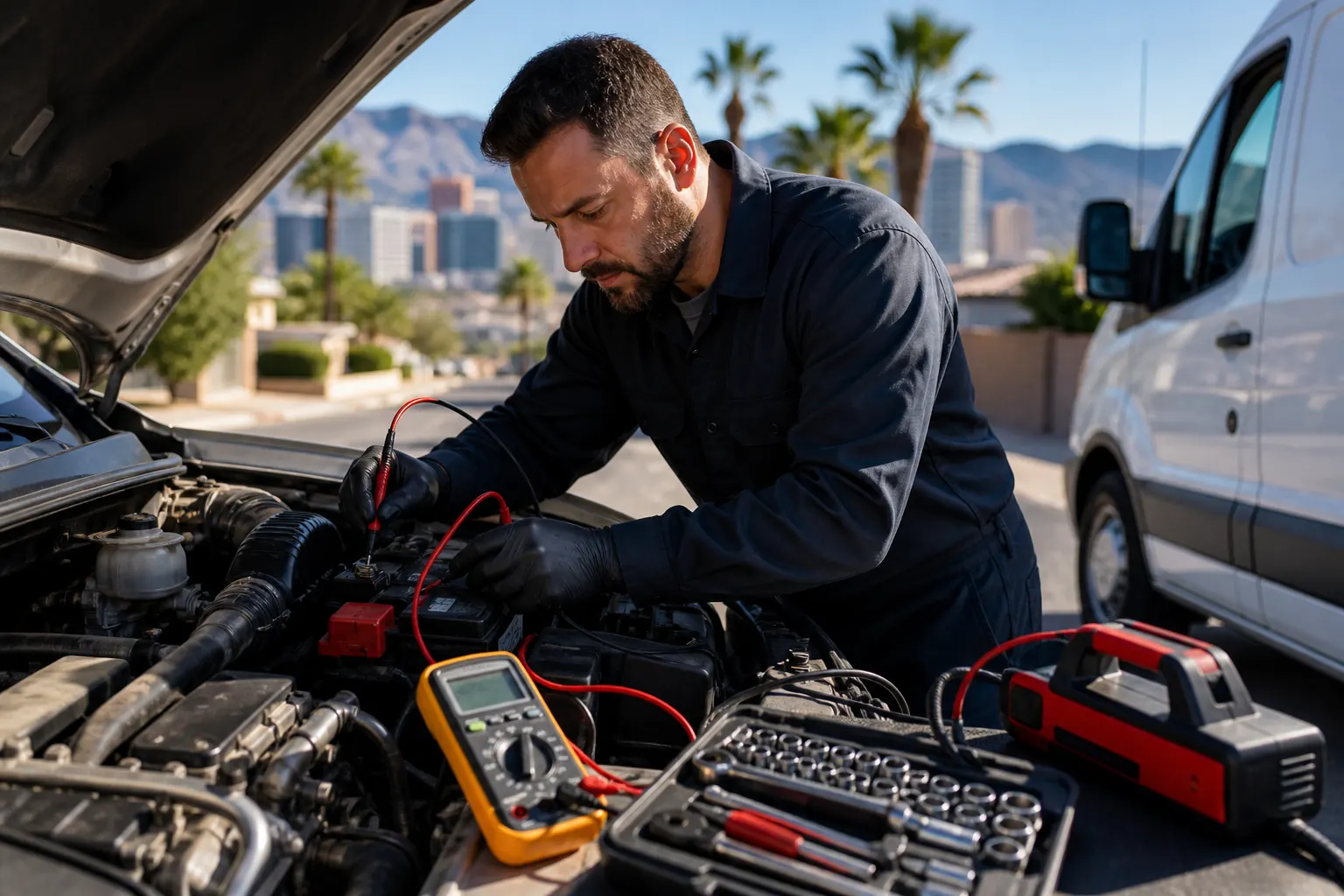
The battery must be evaluated first because a starter cannot work properly without sufficient power. Terminal condition, cable security, and grounds also matter. A battery may show voltage at rest yet fail under load, while a corroded connection may look acceptable from the outside.
Targeted checks can examine voltage reaching the starter, voltage losses across the positive and ground paths, and whether the control signal is present during a start request. Depending on access and equipment, current measurements can add information. The findings should explain why the starter is being condemned rather than just noting that it did not turn.
Control faults may require scan data or circuit diagnosis before any replacement. A vehicle that does not recognize its key or gear position may never command the starter. On vehicles with stop-start, hybrid, or integrated starter-generator arrangements, component design and service procedures can differ substantially from a conventional system.
How charging-system testing works
Charging assessment considers battery condition, output under appropriate operating conditions, cable losses, belt condition, and relevant control data. Some vehicles command different charging levels depending on temperature, electrical demand, and battery state. Specifications for the particular vehicle matter more than a generic voltage target.
An alternator may produce some output but still have a fault affecting capacity or electrical quality. Conversely, a wiring, fuse, ground, or control problem can make a serviceable alternator appear to fail. Testing should distinguish the component from its supporting circuit before parts are ordered.
A deeply discharged battery may need charging and reassessment rather than expecting a replacement alternator to restore it immediately. If the battery itself is no longer serviceable, discuss battery replacement as a separate finding. Replacing both components automatically is not a substitute for evidence.
Access, installation, and on-site limits
Some starters and alternators are accessible from above; others sit behind engine components or require substantial underbody access. Vehicle layout, corrosion, damaged connectors, and belt-drive condition can change the scope. A safe level surface and adequate clearance are essential for any lifting.
A repair that requires extensive disassembly, specialized programming, or high-voltage procedures may belong in a properly equipped shop. Mobile feasibility should be confirmed from your vehicle details and location, with any new limitation explained before work expands. Never crawl under a vehicle supported only by a jack to locate a part for us.
After an approved replacement, related connections and mounting should be checked, along with belt routing or tension where applicable. Verification should address the original starting or charging complaint. Any remaining low-battery condition, warning, or intermittent symptom should be explained rather than hidden by clearing codes.
Requesting a clear repair quote
Provide the year, make, model, engine, mileage, and VIN if available. Mention aftermarket electrical equipment, recent battery work, jump-start history, and whether the failure happens hot or cold. A short description of the exact starting sound is more useful than simply saying the car is dead.
Ask whether the quote covers diagnosis, the selected replacement part, access-related labor, and any identified belt or wiring work. Parts options should be identified rather than treated as interchangeable. Review pricing information and approve a revised scope if testing uncovers an additional fault.
Starter and alternator questions
Can a bad alternator cause a no-start?
Yes. If it fails to keep the battery charged, the battery may eventually lack enough power to crank the engine. Battery and charging tests help separate that sequence from an unrelated starter problem.
Does a click mean the starter is bad?
No. Clicking can also result from inadequate battery power or poor connections. Testing the supply, grounds, and control circuit is important before replacing a starter.
Can I drive with the charging light on?
The vehicle may lose electrical power or stop running, and a belt fault may affect other systems. Stop in a safe place and seek advice based on the warnings and vehicle rather than assuming a predictable driving distance remains.
Request service at your location
Mobile Mechanic dot Vegas serves Las Vegas, North Las Vegas, Henderson, Summerlin, Spring Valley, Enterprise, and Paradise. Check our service areas and describe the vehicle’s exact location so access and suitability can be confirmed. Call 702-547-0038 or use the contact page to discuss the vehicle, symptoms, and proposed work before booking.